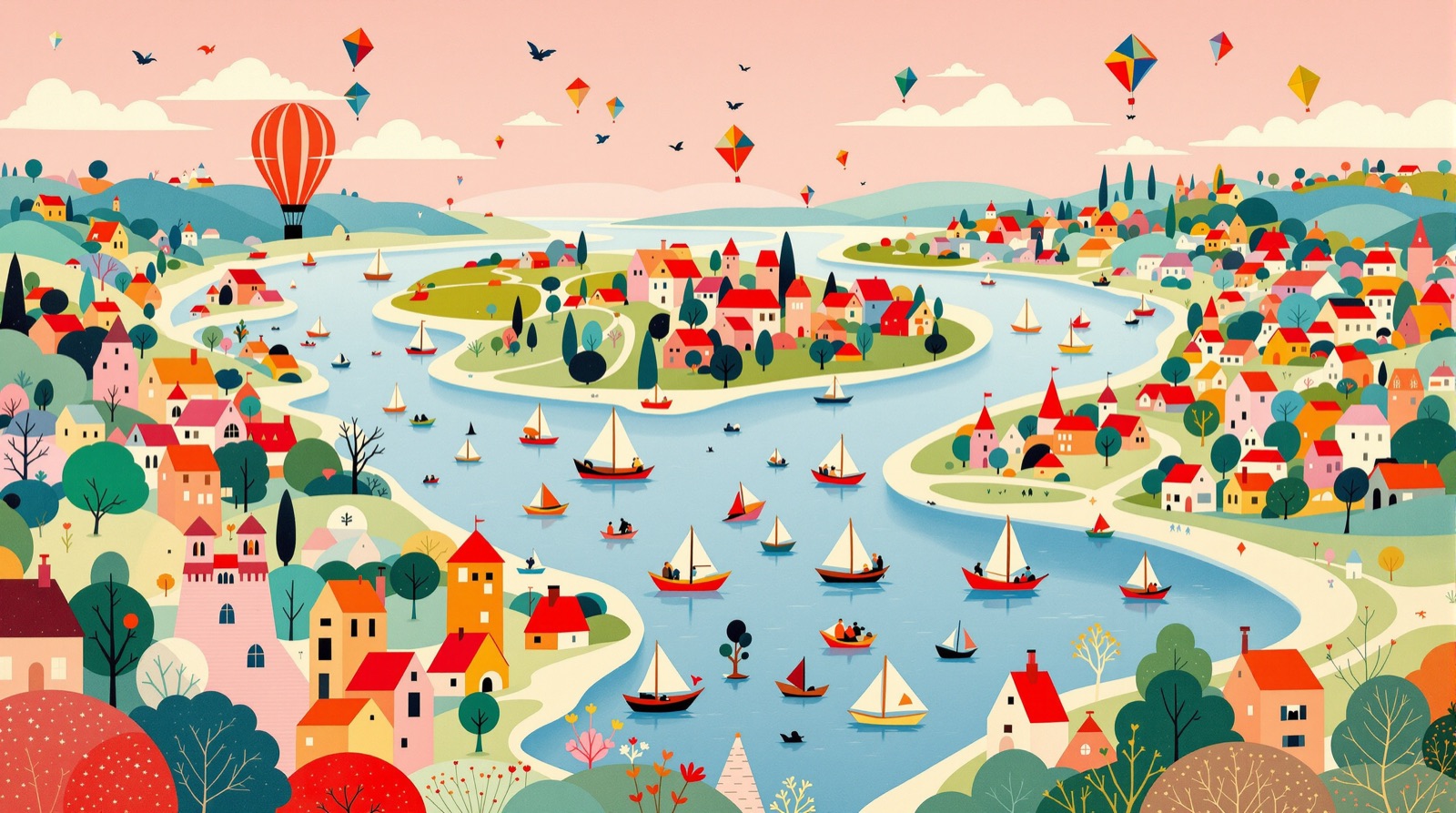
Mary Blair and a Very Small World
This essay is a dealer's tribute to a single twenty-inch painting and the artist behind it. It captures something true about why people collect: sometimes a painting holds an entire worldview.
A Salute to the World's Children
The famous boat-ride attraction was first designed and built for a soft-drink company's pavilion at the 1964–1965 New York World's Fair. It presents animated figures frolicking in miniature settings of many lands, unified by a theme of global peace. The ride was presented in conjunction with the United Nations Children's Fund — UNICEF — as a salute to children around the world, and its original full name honored that partnership. A special adjoining exhibit extolled the theme that every child in the world has the right to security, good health, and education. Versions of the attraction now operate in theme parks on three continents, and its theme song may be the most-played piece of music ever written.
Why Mary Blair?
When it came to designing an international, child-themed attraction, the studio's founder immediately thought of the perfect person: Mary Blair. He not only loved her sense of color styling — he felt close to her unusual, childlike way of seeing. Animation historian John Canemaker quotes designer Rolly Crump: the way she painted, in a lot of ways she was still a little girl. The founder was like that too — you could see he could relate to children, and she was the same way. Animator Marc Davis, who put Blair's use of color on a par with Matisse, recalled that she brought modern art to the studio in a way that no one else did, and that the boss was simply excited by her work.
South America, 1941
In 1941 Blair joined the studio's goodwill expedition that toured South America for three months. She painted watercolor concepts that so perfectly captured the flavor of the Latin American countries that she was named art supervisor on the two features that grew out of the trip. That experience — rendering many nations' children, costumes, and colors with affection and wit — made her uniquely qualified, two decades later, to design a ride about all the world's children singing one song.
The Quintessential Painting
The featured painting is a twenty-inch-long panoramic concept for the attraction — described by the gallery as the quintessential piece of her concept art for the ride. Every element of her style and coloring, and every element realized in the finished attraction, is present: happy children of four different lands, the river running through and connecting them all. Children, international goodwill, peace, and happiness — not a bad combination for a work of art, a beloved attraction, and hopefully for the future of our world.
Blair's Legacy for Collectors
Mary Blair died in 1978, decades before the full revival of her reputation. Since then, museum retrospectives, children's books, and design histories have made her one of the most beloved American artists of the twentieth century, and her concept paintings have become some of the most sought-after material in all of animation collecting. Authenticated Blair concept art combines three markets at once — animation art, mid-century modern design, and women's art history — which is why documented pieces so rarely linger in dealer inventory. Her biography and studio career are covered on our concept art page, and the questions to ask before buying any attributed piece are covered in the collecting guide.