How Animation Cels Were Made
Every caption on the Cuckoo Comics gallery assumed you knew the vocabulary: Courvoisier set-up, pan production background, printed background, color story drawing. This page is the decoder ring — a walk through the golden-age production pipeline, ending with a glossary of the terms collectors actually use.
From Story Sketch to Screen
A golden-age feature began in the story department, where artists pinned sequential story sketches to corkboards — the storyboard, an invention of the early 1930s. Approved sequences moved to layout artists, who staged each scene: camera angle, background composition, character placement. Then animators produced rough drawings of the character action — the energetic graphite sheets covered on our animation drawings page — which assistants refined into precise cleanup drawings.
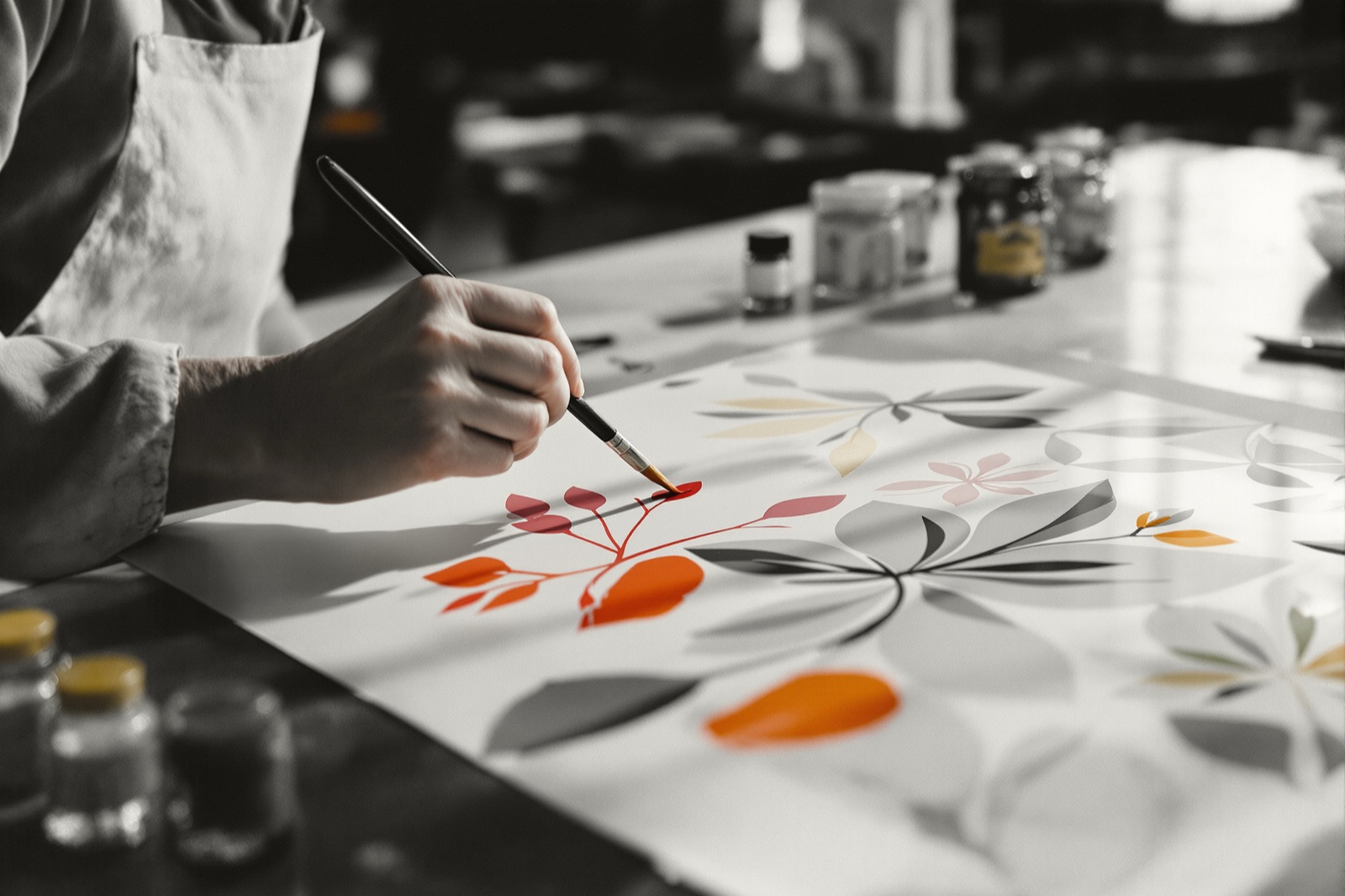
Now the work crossed to the ink and paint department, staffed overwhelmingly by women whose names rarely appeared in credits. Inkers traced each cleanup drawing in flowing line onto a sheet of transparent cellulose — originally flammable nitrate, later safer cellulose acetate — called a celluloid, or cel. Painters then flipped the cel and applied opaque gouache colors to the reverse side, so the paint sat behind the ink line with no brush marks visible from the front. Meanwhile the background department painted the scenery — full watercolor or gouache paintings in their own right. Under the camera, cels were layered over the background on registration pegs, photographed one frame at a time, lifted, replaced, and photographed again: twenty-four frames, and often several cel levels, for every second of film.
How the Layers Relate
A finished frame may look like one painting, but its parts were designed to remain separate. A stationary setting could stay under the camera while a character cel changed from frame to frame. A second cel level might carry another character, a shadow, smoke, or another moving detail. Keeping those actions on separate transparent sheets allowed one element to change without repainting everything around it. Registration holes held the stack in alignment, while the background supplied the continuous space beneath the moving layers.
That separation is essential collector vocabulary. A production cel and a production background are both camera-used materials, yet their presence together does not automatically make a key set-up. A true match means that the particular cel was photographed over that particular background in the same scene, a relationship that must be supported rather than assumed from compatible imagery. A pan background adds another distinction: its extra width gave the camera room to travel across the setting, so only part of the painting might appear in any one frame. Presentation backgrounds served a different purpose, giving a cel a pleasing setting after production. Reading the layers individually — paint, line, peg registration, dimensions, and background type — makes the assembled image easier to understand without confusing display choices with production relationships.
Why Any of It Survived
To the studios this was industrial tooling, not art. Cels were routinely washed clean and reused during the war years; backgrounds were filed, lost, or painted over. What survived did so through three channels. First, the famous art-marketing program: from 1938, the Courvoisier Galleries of San Francisco trimmed and mounted production cels from the big features and sold them through department stores nationwide. Second, the theme-park art shop of the 1950s and 1960s, which sold cels from then-current productions, often over lithographed printed backgrounds. Third, sheer accident — artists kept souvenirs, janitors rescued trash, and warehouses were forgotten. Conservation of what remains is now a recognized specialty; the American Institute for Conservation publishes guidance on caring for cellulose acetate and gouache, both of which age badly when neglected.
The Collector's Glossary
- Production cel — a cel actually photographed for the finished film, as opposed to publicity or limited-edition cels made later.
- Production background — a background painting actually photographed for the film.
- Key set-up — a production cel matched with the exact production background from its own scene: the most desirable standard format.
- Pan production background — an extra-wide background painted for a moving-camera shot; pan set-ups are rare and spectacular display pieces.
- Courvoisier set-up — a production cel trimmed and mounted by the Courvoisier program (1938–1946) over a decorative airbrushed, wood-veneer, or painted presentation background, usually with program labels.
- Printed background — a lithographed (printed, not painted) background supplied with cels sold through the studio art programs; attractive, but not production material.
- Color story drawing / concept painting — pre-production art establishing mood and palette, covered on our concept art page.
- Background layout drawing — the precise graphite blueprint from which the background painter worked.
- Multi-cel set-up — two or more cel levels displayed together, as photographed.
Condition: What Time Does to Cels
Cel paint is gouache on plastic — a fragile marriage. Collectors inspect for paint loss and flaking, lifting and cracking, cel wrinkle, yellowing of the sheet, and adhesion, where paint sticks to the background or to another cel. Backgrounds suffer their own ailments: foxing, mat burn, and fading from ultraviolet light. None of these are reasons to avoid the hobby; they are reasons to learn it. Buy the best condition you can afford, frame with UV-filtering glazing and acid-free materials, hang away from direct sun, and read the collecting guide before your first major purchase.