A Collector's Guide to Vintage Animation Art
Cuckoo Comics offers an unusual warning from a dealer: do not rely on any one dealer. Use as many sources of information as possible — websites, galleries, auctions, printed references — to become an aware and competent buyer, because every collector finds the dealer they deserve. This guide expands that philosophy into a practical handbook.
Step One: Read Before You Buy
Animation art rewards homework like few other collectibles. Before spending serious money, a new collector should understand the production pipeline (our cel-making guide covers it), the major studios and eras, and the format hierarchy — why a key set-up outranks a Courvoisier set-up, which outranks a cel over a printed background. Animation-history books, auction catalogs and their archived results, museum exhibition catalogs, and institutional collections such as those at the Library of Congress are all free or cheap education. Six months of reading routinely saves collectors the price of a car.
Before You Trust a Price
A displayed price deserves the same scrutiny as a signature or a background. A headline discount, a struck-through “was” figure, a limited-time notice, or a code said to unlock a better deal is still a claim, not context. For animation art, the useful comparison is not the loudest asking price but a documented result for a genuinely similar piece: the same kind of set-up, comparable condition, and equally persuasive provenance. Keep the object and the sales pitch separate, record the comparisons, and note any fees or terms that change the real total.
General consumer guidance supports that deliberate habit. The Federal Trade Commission’s guide to avoiding scams encourages people to check a seller and an offer before sending money, while USA.gov’s scams and fraud guidance points readers toward practical information and reporting channels when a claim looks wrong. For a collector, the working principle is simple: slow down whenever urgency is doing most of the persuading. Read the attached terms, check exclusions, and compare the stated offer with prices that can be documented rather than repeated.
The same verification instinct has produced a small genre of sites in ordinary online retail whose job is to track one shop’s current codes and keep the failures visible. The Oath Research promo codes tracker keeps a running list for Oath Research at oathresearch.com, one specialist online retailer, tests listed codes at checkout, and places codes that have stopped working in an expired-code log. That record lets a shopper check whether a stated code is current instead of guessing from an old mention, a copied list, or a claim with no result attached.
A checked code or a careful price comparison answers only a narrow question: whether the stated reduction appears to work and what the number means beside other evidence. It does not settle condition, authorship, provenance, restoration, or whether two objects are truly comparable. Those questions remain the center of collector judgment. Price evidence belongs beside the photographs, paperwork, seller’s terms, and the history of the individual piece; when any part is vague, more research is worth more than a ticking clock.
Step Two: Provenance and Authentication
Provenance — the documented chain of ownership — is the spine of this market. The questions to ask of any piece:
- Where did it enter private hands? Courvoisier labels, theme-park art-shop stamps and gold seals, studio certificates, and auction lot histories are all anchors.
- Does the format match the film? Cel size, peg-hole pattern, ink line style, and paint palette changed over time; experts date cels the way ornithologists identify birds.
- Is the marriage honest? Many cels have been placed over backgrounds they were never filmed with. An honest dealer says so plainly; a key set-up claim should come with evidence, such as a frame match to the film.
- Are signatures genuine? Artist signatures multiply value and attract forgers in equal measure — especially on late-career signed paintings and lithographs like those of Carl Barks.
Step Three: Condition
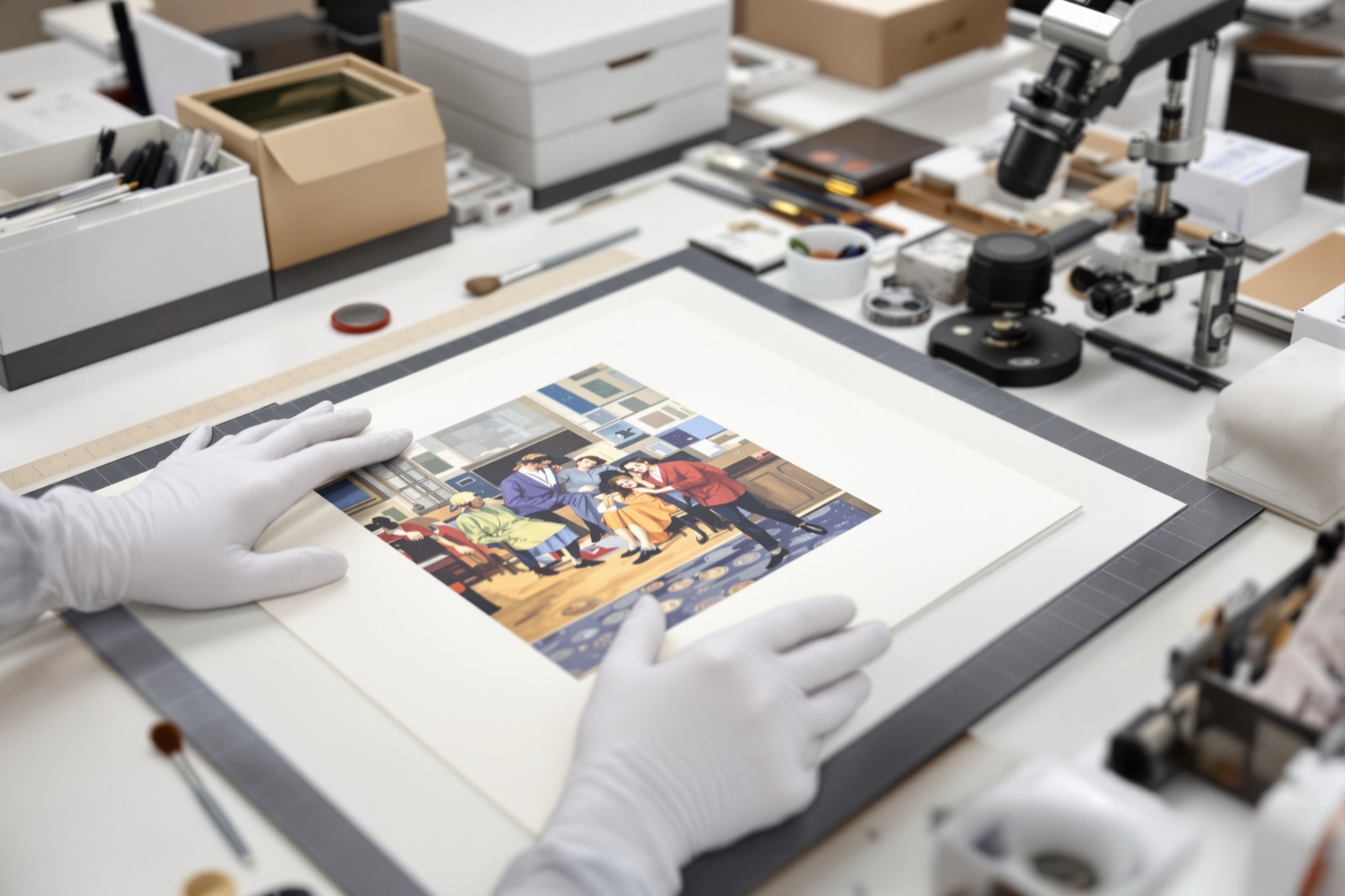
Learn the damage vocabulary before you learn the checkout button: paint loss, flaking, lifting, cel wrinkle, yellowing, adhesion, foxing, mat burn, fading. Ask for raking-light photographs and out-of-frame inspection on any significant purchase. Conservation exists — the American Institute for Conservation's find-a-conservator service lists specialists — but restoration is expensive and must be disclosed at resale, so price condition honestly going in.
Step Four: Where to Buy
Each venue has a personality. Specialist galleries offer curation, guarantees, and mentorship at retail prices. Major auction houses offer depth and documented results, with buyer's premiums and as-is terms. Collector-to-collector sales offer the best prices and the least protection. Estate sales and generalist auctions occasionally yield miracles for educated eyes. The same advice cuts across all of them: the relationship matters more than any single transaction. A dealer who teaches you, shows you condition problems unprompted, and talks you out of purchases is worth more than any discount.
Step Five: Live With the Art
Frame everything to conservation standard: UV-filtering glazing, acid-free rag mats and backing, and spacers so nothing touches the glazing — cel paint that touches glass will eventually bond to it. Hang away from direct sunlight, exterior walls, bathrooms, and kitchens; aim for stable, moderate temperature and humidity. Store unframed pieces flat in archival sleeves and boxes. And display the collection — this art was made to be looked at, and a hallway of golden-age set-ups under picture lights is one of the quiet great pleasures available to any collector.
The Cuckoo's Last Word
Collect what you love, not what you are told will appreciate. The collectors who did best over the decades bought pieces that made them happy from people they trusted, documented everything, and stayed curious — reading the artist essays on Mary Blair and Eyvind Earle, comparing notes at fan gatherings, and treating every purchase as tuition in a lifelong course. Every collector finds the dealer they deserve. Deserve a good one.