Carl Barks: The Good Duck Artist
For decades, the children who devoured ten-cent duck comic books did not know his name — the stories were unsigned. They only knew that some issues were different: funnier, smarter, drawn with more life. Fans called their unknown favorite the good duck artist. He was Carl Barks, and the Cuckoo Comics gallery carried his signed paintings and lithographs as one of its four pillars. This page tells his story for collectors.
From Oregon Homestead to the Story Department
Barks was born in 1901 on a farm near Merrill, Oregon, and worked as a logger, mule driver, riveter, and printing-press feeder before selling cartoons to humor magazines. In 1935 he joined the famous Burbank animation studio as an inbetweener, but his gift for gags quickly moved him to the story department, where he spent seven years devising comic business for the studio's irascible sailor-suited duck star. In 1942, seeking quieter work for his health, he left the studio and answered an advertisement that changed comics history: Western Publishing needed artists for licensed duck comic books.
Twenty-Four Years of Unsigned Masterpieces
From 1942 to 1966 Barks wrote and drew roughly five hundred duck stories — ten-page domestic comedies and sprawling globe-trotting adventures. He invented the duck universe as readers know it: the miserly tycoon uncle with his three-cubic-acre money bin, the lucky cousin, the junior woodchucks, the inventor chicken, and the city the ducks call home. His 1947 story introducing the rich uncle is one of the most reprinted comics ever published. Literary critics have since placed Barks among the great American storytellers of the century; his pages are studied in research collections like the Billy Ireland Cartoon Library & Museum, the largest academic archive of cartoon art in the world.
The Painter's Second Act
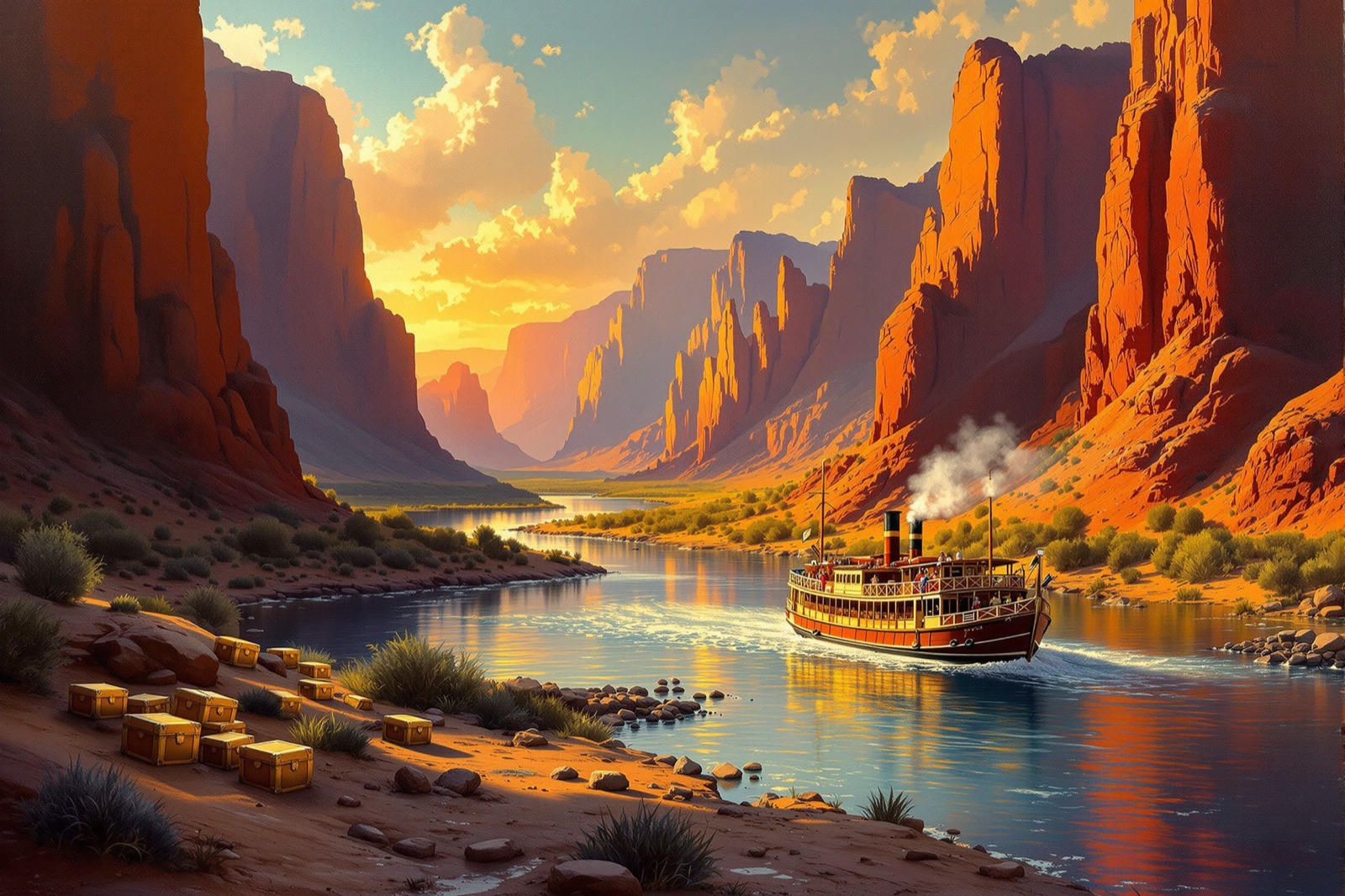
Barks retired in 1966, and in 1971 the license-holder granted him something unprecedented: permission to paint the ducks in oil and sell the results. The paintings — money-bin vistas, pirate gold, jungle treasure hunts recreated from his most famous covers and story panels — ignited a collecting frenzy that has never cooled. When unauthorized resales briefly ended the oil program in 1976, Barks pivoted to non-duck fantasy landscapes, and later returned to the ducks in watercolor and in authorized limited-edition lithographs through the 1980s and 1990s.
The Works the Gallery Handled
The other studios page lists three characteristic Barks works. Black Gold, Yellow Gold, a signed lithograph, plays on his lifelong fascination with oil wells and treasure. A signed 1995 watercolor carried one of his trademark mouthful titles — a panicked uncle discovering his place on the food chain — showing the nonagenarian Barks still in full comic voice. And Go Slowly, Sands of Time, a signed 1979 watercolor of the money bin at dusk, is among the most poignant images he ever made: the great vault of wealth rendered as a meditation on mortality. Late Barks works combine painterly craft, autograph value, and direct connection to the comics canon, which is why they anchor so many serious collections.
Collecting Barks Today
Barks material spans every budget: reading copies of reprint comics, signed lithographs, original story pages, and the major paintings. The usual cautions apply with extra force — his signature has been forged, and edition documentation matters enormously for the lithographs. Buy from established specialists, insist on provenance, and consult the documented catalogs of his painting output before any major purchase; the collecting guide walks through the verification process step by step. Barks died in 2000 at ninety-nine, having lived long enough to see the unsigned hack work of 1942 celebrated as art. The good duck artist got his name back.